What Causes SI Joint Pain?
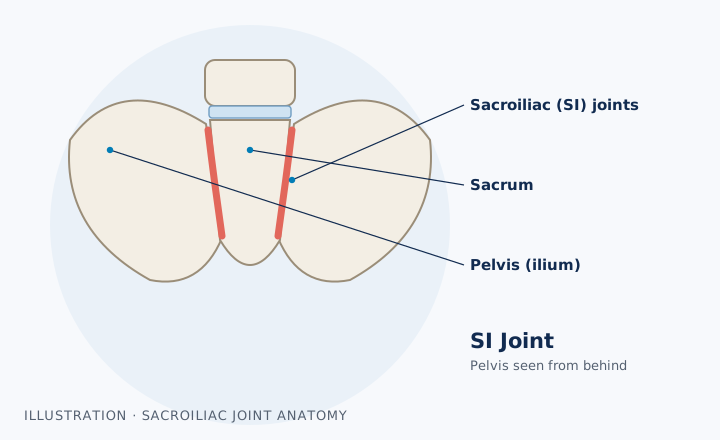
The SI joints sit on either side of the sacrum, linking the spine to the pelvis and absorbing shock between the upper body and legs with every step. Pain can develop from a specific traumatic event (a fall, a motor vehicle collision), from the ligament laxity of pregnancy and postpartum recovery, from gradual degenerative wear over time, or as a secondary effect after lumbar fusion — when a long fusion changes how forces move through the spine, the SI joint below it can take on more stress than it's built for.
Recognizing SI Joint Pain
SI joint pain typically presents as low back pain centered just below the beltline, often on one side, that can radiate into the buttock and upper thigh. It's frequently worse with transitional movements — standing up from sitting, getting out of a car, rolling over in bed — and with prolonged sitting or climbing stairs. Because the pain pattern overlaps so closely with lumbar spine conditions, SI joint dysfunction is commonly misdiagnosed or overlooked entirely, especially in patients who've already had lumbar imaging that looks unremarkable.
Diagnosis: Why a Shot Matters as Much as a Scan
Imaging alone rarely confirms SI joint pain — X-rays and MRI can show degenerative changes without indicating whether the joint is actually the pain generator. Physical exam uses a cluster of provocative maneuvers that stress the joint in specific ways, but the most reliable confirmation is a diagnostic injection: a small amount of anesthetic placed directly into the joint under imaging guidance. Significant, if temporary, relief from that injection is the clearest sign the SI joint is the source of symptoms, and it's typically required before any surgical treatment is considered.
When Should You See a Specialist?
- Low back or buttock pain, often one-sided, that's worse standing up from sitting or climbing stairs
- Persistent pain following a fall, motor vehicle accident, or pregnancy
- New or worsening low back pain after a prior lumbar fusion
- Low back pain that hasn't responded to standard lumbar spine treatment
Treatment Options for SI Joint Pain
Most patients begin with conservative care: physical therapy focused on pelvic stability, activity modification, and anti-inflammatory medication. A diagnostic — and often therapeutic — injection is typically the next step, and some patients get durable relief from a series of injections or radiofrequency ablation, which interrupts the nerves carrying pain signals from the joint. For patients who get clear but temporary relief from injections and whose pain significantly affects daily function, SI joint fusion stabilizes the joint and can provide lasting relief.